Principles are ways of successfully dealing with reality to get what you want out of life.
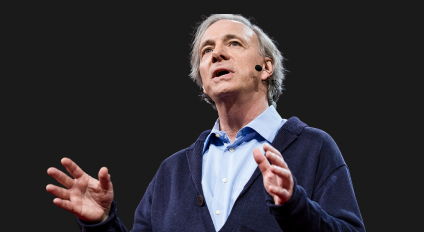
Ray Dalio, one of the world’s most successful investors and entrepreneurs, cites principles as his key to success.
Principles are ways of successfully dealing with reality to get what you want out of life.
Ray Dalio, one of the world’s most successful investors and entrepreneurs, cites principles as his key to success.
In 1975, Ray Dalio founded Bridgewater Associates, out of his two-bedroom apartment in New York City. Over forty years later, Bridgewater has grown into the largest hedge fund in the world and the fifth most important private company in the United States (according to Fortune magazine), and Dalio himself has been named to TIME’s list of the 100 most influential people in the world. Along the way Dalio discovered unique principles that have led to his and Bridgewater’s unique success. It is these principles, and not anything special about Dalio, that he believes are the reason behind whatever success he has had. He is now at a stage in his life that he wants to pass these principles along to others for them to judge for themselves and to do whatever they want with them.
Some people are focused on daily tasks while others are focused on their goals and how to achieve them. I've found these differences to be quite similar to the differences between people who are intuitive vs. sensing. Those who tend to focus on goals and "visualize" best can see the big pictures over time and are also more likely to make meaningful changes and anticipate future events. These goal-oriented people can step back from the day-to-day and reflect on what and how they're doing. They are the most suitable for creating new things (organizations, projects, etc.) and managing organizations that have lots of change. They typically make the most visionary leaders because of their ability to take a broad view and see the whole picture.
In contrast, those who tend to focus on daily tasks are better at managing things that don't change much or that require processes to be completed reliably. Task-oriented people tend to make incremental changes that reference what already exists. They are slower to depart from the status quo and more likely to be blindsided by sudden events. On the other hand, they're typically more reliable. Although it may seem that their focus is narrower than higher-level thinkers, the roles they play are no less critical. I would never have gotten this book out or accomplished hardly anything else worthwhile if I didn't work with people who are wonderful at taking care of details.
You need to focus on both so you need to know how to navigate between them or have people who focus well on each and work well together. Good leaders know how to orcahatrate their people well, knowing which people are strong and weak at playing what positions and guiding them to work well together.
I'm an ENTP
I'm an ENTP
Learning is best achieved by doing what you want to learn. Being around and listening to people who do it well is also good. My experience (and the psychological research I studied) shows that people’s approaches to thinking typically don’t change much so that the best ways for one to see things that one is not inclined to see is through the eyes of those who can see the way they’d like to. That’s why radical open-mindedness and knowing the art of thoughtful disagreement (explained in Principles) are so valuable.
Successful organizations and successful people know how to connect focusing on goals and focusing on tasks. It appears like looking at the same things from different levels. For example, see this “Powers of 10” video which you can find here: https://www.youtube.com/watch?v=0fKBhvDjuy0. That’s why it takes people who are inclined to see things well at different levels and know how to put them in the right jobs and communicate well together - and ideally have one or two leaders who can navigate between these perspectives.