Principles are ways of successfully dealing with reality to get what you want out of life.
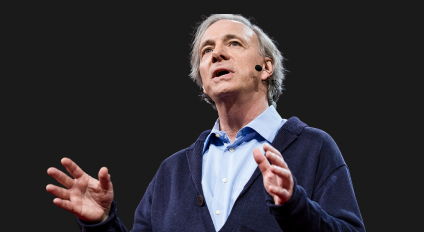
Ray Dalio, one of the world’s most successful investors and entrepreneurs, cites principles as his key to success.
Principles are ways of successfully dealing with reality to get what you want out of life.
Ray Dalio, one of the world’s most successful investors and entrepreneurs, cites principles as his key to success.
In 1975, Ray Dalio founded Bridgewater Associates, out of his two-bedroom apartment in New York City. Over forty years later, Bridgewater has grown into the largest hedge fund in the world and the fifth most important private company in the United States (according to Fortune magazine), and Dalio himself has been named to TIME’s list of the 100 most influential people in the world. Along the way Dalio discovered unique principles that have led to his and Bridgewater’s unique success. It is these principles, and not anything special about Dalio, that he believes are the reason behind whatever success he has had. He is now at a stage in his life that he wants to pass these principles along to others for them to judge for themselves and to do whatever they want with them.
People who achieve success and drive progress deeply understand the cause-effect relationships that govern reality and have principles for using them to get what they want. The converse is also true: Idealists who are not well grounded in reality create problems, not progress.
What does a successful life look like? We all have our own deepseated needs, so we each have to decide for ourselves what success is. I don’t care whether you want to be a master of the universe, a couch potato, or anything else—I really don’t. Some people want to change the world and others want to operate in simple harmony with it and savor life. Neither is better. Each of us needs to decide what we value most and choose the paths we take to achieve it.
Take a moment to reflect on where you are on the following scale, which illustrates an overly simplified choice you should think about. Where would you put yourself on it?
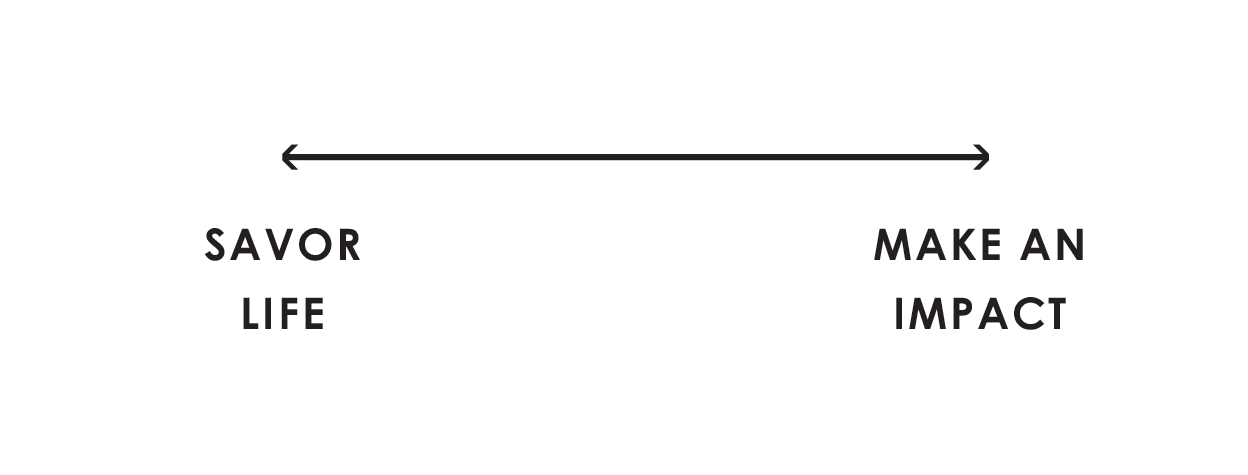
The question isn’t just how much of each to go after, but how hard to work to get as much as possible. I wanted crazy amounts of each, was thrilled to work hard to get as much of them as possible, and found that they could largely be one and the same and mutually reinforcing. Over time I learned that getting more out of life wasn’t just a matter of working harder at it. It was much more a matter of working effectively, because working effectively could increase my capacity by hundreds of times. I don’t care what you want or how hard you want to work for it. That’s for you to decide. I’m just trying to pass along to you what has helped me get the most out of each hour of time and each unit of effort.
To turn dreams into reality, start by clearly defining your vision and understanding its importance. Break down your dream into actionable steps, assessing the resources and skills needed while identifying potential obstacles. Fuel your journey with determination to persist through challenges. Align your daily actions with your long-term vision, making decisions that support your goals even when difficult. By blending ambition with a realistic plan and unwavering commitment, you create a pathway to achieving your dreams. This approach not only helps you reach your objectives but also fosters growth and adaptability along the way.
If you want a happy life and you get a happy life, that equals getting a successful life.
Luck plays a role but luck tends to cancel out over the long term with large sample size.
I never felt “trapped” in my office doing what I was doing though because I always realized that I had free choices that had consequences that I had to a lot of freedom make decisions about. The same is true for you in that you have a lot of freedom to make choices that have consequences and are faced with the puzzles of how to make your choices in the best possible way. Don’t feel trapped. If you solve the puzzles - which you can do by being radically open-minded and through the triangulation methods I described in Principles - you can have a great life.
Feeling numb after years of hard work signals a need to reassess your goals and definition of success, which doesn’t necessarily mean losing ambition but rather evolving priorities. My principle of Dreams + Reality + Determination = A Successful Life emphasizes continuous reflection and adaptation. Consider whether your current path aligns with your values and if working smarter, not harder, might reignite your passion. Early in my career, I learned that understanding market patterns and cause-effect relationships allowed me to achieve more with less effort. Embrace this reflective period as an opportunity to realign with your true passions, using an open mind and determination to guide you toward a more fulfilling path.
I believe that a successful life is having the life you want and not conventional measures of success, like amount of money, power or status.
What you are picking up is not that I don't like idealistic thinking; it's that I don't like idealistic thinking that doesn't deal with practicalities to make dreams happen because that's just delusion. Don't get me wrong--I don't think it's easy to know what's idealistic and realistic so I don't believe that one should not pursue dreams because one doesn't know or think that one can achieve them. I think one who is clever pursues dreams and follows practical approaches to trial and error and learning to achieve the dreams.
It is your life and responsibility to figure out. Balancing respect for your parents’ experiences with the courage to follow your own path is crucial. Each generation faces unique circumstances, leading to different choices. Align your dreams with reality and pursue them with determination. Communicate openly with your parents about your aspirations and listen to their perspectives, fostering mutual understanding. For instance, I once diverged from my father’s expectations by choosing an unconventional path in finance. Through dialogue, we found common ground, respecting each other’s views. The key is to honor your parents’ wisdom while staying true to your dreams, creating a life that is meaningful to you and respectful of your family’s values.
While it’s true that randomness and luck play a role in life, understanding causality helps you make better decisions and increase your chances of success. I’ve found that by focusing on cause-effect relationships, you can create principles to guide your actions. This doesn’t mean you’ll eliminate all uncertainty, but it does mean you’ll be better equipped to handle whatever comes your way. For example, if you understand the importance of hard work and preparation, you’re more likely to succeed, even if luck isn’t on your side. So, while you can’t control everything, you can control how you respond to the realities you face. Making peace with randomness involves accepting that some things are beyond your control but also recognizing that your actions and mindset can significantly influence your outcomes. What’s your assessment of the role that understanding cause-effect relationships has played in your personal or professional successes so far?
At least 3 characters are required to perform a search