Principles are ways of successfully dealing with reality to get what you want out of life.
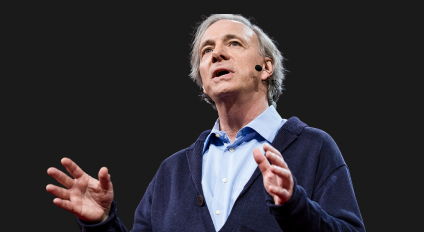
Ray Dalio, one of the world’s most successful investors and entrepreneurs, cites principles as his key to success.
Principles are ways of successfully dealing with reality to get what you want out of life.
Ray Dalio, one of the world’s most successful investors and entrepreneurs, cites principles as his key to success.
In 1975, Ray Dalio founded Bridgewater Associates, out of his two-bedroom apartment in New York City. Over forty years later, Bridgewater has grown into the largest hedge fund in the world and the fifth most important private company in the United States (according to Fortune magazine), and Dalio himself has been named to TIME’s list of the 100 most influential people in the world. Along the way Dalio discovered unique principles that have led to his and Bridgewater’s unique success. It is these principles, and not anything special about Dalio, that he believes are the reason behind whatever success he has had. He is now at a stage in his life that he wants to pass these principles along to others for them to judge for themselves and to do whatever they want with them.
Separate your "must-dos" from your "like-to-dos" and don't mistakenly slip any "like-to-dos" onto the first list.
The point of this principle is to help the person who has a bias to not do something because they see that there some cons to making it to not make that mistake - to instead weight the pros against the cons well. For example, you might 1) make a list which on one side has the pros and and other has the cons, or if you want to be a bit more sophisticated you also might 2) assign weights to each of them and perhaps might even 3) measure the severity of each — and then do the multiplication and addition to see which outweighes the other.
You’re right. That’s what I’m saying.
Both are true and what we are really talking about is loving what is good for you. If you do what you love that is bad for you (which is another way of say if you do what has good first order consequences and bad second order consequences, like eating cake when you want to lose weight) that’s bad for you. You have to get good at doing what you dislike because the bigger second order consequences are good for you so you have to push through. Said differently, if you know of these different choices and make the decision well to get you what you really want, you will be a great decision maker and if you can develop the habit that makes you enjoy what you really want and see that you’re losing it because doing what you you like is tripping you up, you will come to dislike the things that you like that are tripping you and you will savor more what you really want. It’s all a matter of developing the rights habits and associations.
Its a good habit, but it’s all a matter of prioritization of the consequences. If what you like to do gives you more rewards than failing to do what you must do costs you, then by all means do it. However, to me that just means that what you want to do is your more important must do, so it’s a matter of semantics.
Develop great habits.
Wonderful! Pass it along. You and your friends can get it for free with lots of other helpful tools on my app Principles in Action that available on the Apple App Store.
Sure.
At least 3 characters are required to perform a search