Principles are ways of successfully dealing with reality to get what you want out of life.
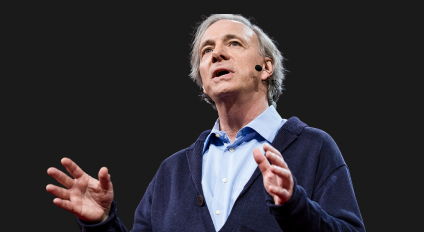
Ray Dalio, one of the world’s most successful investors and entrepreneurs, cites principles as his key to success.
Principles are ways of successfully dealing with reality to get what you want out of life.
Ray Dalio, one of the world’s most successful investors and entrepreneurs, cites principles as his key to success.
In 1975, Ray Dalio founded Bridgewater Associates, out of his two-bedroom apartment in New York City. Over forty years later, Bridgewater has grown into the largest hedge fund in the world and the fifth most important private company in the United States (according to Fortune magazine), and Dalio himself has been named to TIME’s list of the 100 most influential people in the world. Along the way Dalio discovered unique principles that have led to his and Bridgewater’s unique success. It is these principles, and not anything special about Dalio, that he believes are the reason behind whatever success he has had. He is now at a stage in his life that he wants to pass these principles along to others for them to judge for themselves and to do whatever they want with them.
As with animals, many of our decision-making drivers are below the surface. An animal doesn’t “decide” to fly or hunt or sleep or fight in the way that we go about making many of our own choices of what to do—it simply follows the instructions that come from the subconscious parts of its brain. These same sorts of instructions come to us from the same parts of our brains, sometimes for good evolutionary reasons and sometimes to our detriment. Our subconscious fears and desires drive our motivations and actions through emotions such as love, fear, and inspiration. It’s physiological. Love, for example, is a cocktail of chemicals (such as oxytocin) secreted by the pituitary gland.
While I had always assumed that logical conversation is the best way for people to get at what is true, armed with this new knowledge about the brain, I came to understand that there are large parts of our brains that don’t do what is logical. For example, I learned that when people refer to their “feelings”—such as saying “I feel that you were unfair with me”—they are typically referring to messages that originate in the emotional, subconscious parts of their brains. I also came to understand that while some subconscious parts of our brains are dangerously animalistic, others are smarter and quicker than our conscious minds. Our greatest moments of inspiration often “pop” up from our subconscious. We experience these creative breakthroughs when we are relaxed and not trying to access the part of the brain in which they reside, which is generally the neocortex. When you say, “I just thought of something,” you noticed your subconscious mind telling your conscious mind something. With training, it’s possible to open this stream of communication.
Many people only see the conscious mind and aren’t aware of the benefits of connecting it to the subconscious. They believe that the way to accomplish more is to cram more into the conscious mind and make it work harder, but this is often counterproductive. While it may seem counterintuitive, clearing your head can be the best way to make progress.
Knowing this, I now understand why creativity comes to me when I relax (like when I’m in the shower) and how meditation helps open this connection. Because it is physiological, I can actually feel the creative thoughts coming from elsewhere and flowing into my conscious mind.
But a note of caution is in order too: When thoughts and instructions come to me from my subconscious, rather than acting on them immediately, I have gotten into the habit of examining them with my conscious, logical mind. I have found that in addition to helping me figure out which thoughts are valid and why I am reacting to them as I do, doing this opens further communication between my conscious and subconscious minds. It’s helpful to write down the results of this process. In fact that’s how my Principles came about.
If you take nothing else away from this chapter, be aware of your subconscious—of how it can both harm you and help you, and how by consciously reflecting on what comes out of it, perhaps with the help of others, you can become happier and more effective.
It’s music to my ears to hear how this is working for you.
Those are good things to do. Additionally I recommend that you a) recognize that you have your two yous b) with that perspective in mind constantly observe the struggles that they (your lower level subconscious emotional self, and your upper level, conscious self) have with each other, and then c) learn how to reconcile them. By reconciling them I mean going above yourself to observe what you are feeling from the subconscious, bring it to the surface and compare it with what the conscious mind is telling you and reconcile the differences. Because what comes from the subconscious can sometimes be great (eg good intuition, good imagination), and sometimes be harmful (ie self-damaging emotions), by looking at it logically you will be able to better assess whether what’s coming at you from the subconscious is good or bad. When the concious/logical and the subconscious/emotional are in agreement, you’re probably good to go. When they are at odds you will have to choose which one you will go with. If you are letting illogical emotions drive you, that will probably cost you big time. Perhaps by staring at that you will choose wisely.
At least 3 characters are required to perform a search