Principles are ways of successfully dealing with reality to get what you want out of life.
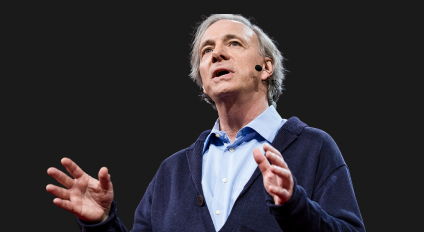
Ray Dalio, one of the world’s most successful investors and entrepreneurs, cites principles as his key to success.
Principles are ways of successfully dealing with reality to get what you want out of life.
Ray Dalio, one of the world’s most successful investors and entrepreneurs, cites principles as his key to success.
In 1975, Ray Dalio founded Bridgewater Associates, out of his two-bedroom apartment in New York City. Over forty years later, Bridgewater has grown into the largest hedge fund in the world and the fifth most important private company in the United States (according to Fortune magazine), and Dalio himself has been named to TIME’s list of the 100 most influential people in the world. Along the way Dalio discovered unique principles that have led to his and Bridgewater’s unique success. It is these principles, and not anything special about Dalio, that he believes are the reason behind whatever success he has had. He is now at a stage in his life that he wants to pass these principles along to others for them to judge for themselves and to do whatever they want with them.
Things don't just happen by themselves--they happen because specific people did or didn't do specific things. Don't undermine personal accountability with vagueness. Instead of the passive generalization or the royal "we," attribute specific actions to specific people: "Harry didn't handle this well." Also avoid "We should . . ." or "We are . . ." and so on. Since individuals are the most important building blocks of any organization and since individuals are responsible for the ways things are done, mistakes must be connected to those individuals by name. Someone created the procedure that went wrong or made the faulty decision. Glossing over that can only slow progress toward improvement.
Why do you want to hide individual failures? Think about it. It’s not logical to do so but it is commonly done because of emotional barriers to having individual accountability. And that is because our society has shamed people who make mistakes and have weaknesses rather than recognized that everybody makes mistakes and has weaknesses and that discovering them and dealing with them well is good. It’s just getting used to it in a culture where people embrace it because they realize that it’s good for them.
Let’s think about this. Why is one inclined to to hide individual failures? It’s not logical to do so but it is commonly done because of emotional barriers to having individual accountability. That is because our society has shamed people who make mistakes and have weaknesses rather than recognize that everybody makes mistakes and has weaknesses and that discovering them and dealing with them well is good. It’s just getting used to it in a culture where people embrace it because they realize that it’s good for them. We have found it remarkably effective for producing radical individual improvement and radical improvement of our organization.
In most environments, making mistakes and making clear who made mistakes is perceived as bad. That is what you are imagining, so this principle seems bad to you. Now imagine an environment in which making mistakes and knowing who made mistakes is good (because it leads to learning about oneself and making changes to make things go better) and making mistakes is normal (because it happens to everyone). Then it would be good rather than bad to have that clarity. That is the type of environment and mindset that makes this way of operating good rather than bad. To me it is not a good idea to have a culture that hides mistakes and weaknesses but ones that brings them out to help people and the organization improve.
At least 3 characters are required to perform a search