Principles are ways of successfully dealing with reality to get what you want out of life.
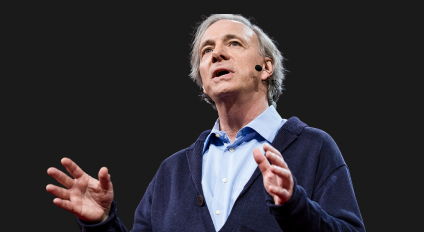
Ray Dalio, one of the world’s most successful investors and entrepreneurs, cites principles as his key to success.
Principles are ways of successfully dealing with reality to get what you want out of life.
Ray Dalio, one of the world’s most successful investors and entrepreneurs, cites principles as his key to success.
In 1975, Ray Dalio founded Bridgewater Associates, out of his two-bedroom apartment in New York City. Over forty years later, Bridgewater has grown into the largest hedge fund in the world and the fifth most important private company in the United States (according to Fortune magazine), and Dalio himself has been named to TIME’s list of the 100 most influential people in the world. Along the way Dalio discovered unique principles that have led to his and Bridgewater’s unique success. It is these principles, and not anything special about Dalio, that he believes are the reason behind whatever success he has had. He is now at a stage in his life that he wants to pass these principles along to others for them to judge for themselves and to do whatever they want with them.
When such arguments win out, the idea meritocracy will be weakened. Don't let that happen. If people respect the rules of the idea meritocracy, there will be no conflict. I know that from my experiences over decades. However, I also know that there will be people who put what they want above the idea meritocracy and threaten it. Consider those people to be enemies of the system and get rid of them.
For any good running system, as for the idea-meritocracy that I’m describing here, the owners/leaders are ultimately responsible for providing leadership within the governance system and all the members of the organization (including the leaders) understand that governance system and are in sync with it. It’s important for the leaders and the other members of the organization to believe that the system is fair and that it works well. Otherwise there will be some form of revolution or repression, both of which are very bad for everyone. That governance system needs to have ways of operating which, in very rare cases, causes exceptions to be made to normal governance, including special powers being granted. Such leadership moves will be judged by the other people in the organization. Ultimately the leaders will be judged by the people in the organization just as the leaders in the organization have to judge the people in the organization and either they believe in each other or they don’t. There has to be good communication between them to try to achieve the unity thats required to achieve success. Doing that well is one of the special aspects of a good idea-meritocracy because all views can be worked through well. If the organization/system doesn’t have that unity, changes will have to be made. In all organizations and systems these are made in various ways, largely based on who has what power.
Right. That is why the principles and tools that I described in Principles are so important. The way is works is that most people know that they work in an idea-meritocracy and go about doing their jobs and refer to the principles and tools to help them understand how they should handle things. While I gave you the ones that worked for me, you have to have ones that work for you as all organizations need principles that are clearly written down and tools that help people operate by the organization’s principles.
At least 3 characters are required to perform a search