Principles are ways of successfully dealing with reality to get what you want out of life.
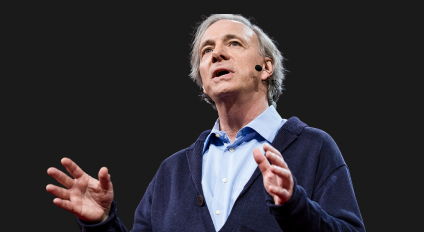
Ray Dalio, one of the world’s most successful investors and entrepreneurs, cites principles as his key to success.
Principles are ways of successfully dealing with reality to get what you want out of life.
Ray Dalio, one of the world’s most successful investors and entrepreneurs, cites principles as his key to success.
In 1975, Ray Dalio founded Bridgewater Associates, out of his two-bedroom apartment in New York City. Over forty years later, Bridgewater has grown into the largest hedge fund in the world and the fifth most important private company in the United States (according to Fortune magazine), and Dalio himself has been named to TIME’s list of the 100 most influential people in the world. Along the way Dalio discovered unique principles that have led to his and Bridgewater’s unique success. It is these principles, and not anything special about Dalio, that he believes are the reason behind whatever success he has had. He is now at a stage in his life that he wants to pass these principles along to others for them to judge for themselves and to do whatever they want with them.
Be wary of relying on anything else. Unfortunately, numerous tests by psychologists show that the majority of people follow the lower-level path most of the time, which leads to inferior decisions without their realizing it. As Carl Jung put it, "Until you make the unconscious conscious, it will direct your life and you will call it fate." It's even more important that decision making be evidence-based and logical when groups of people are working together. If it's not, the process will inevitably be dominated by the most powerful rather than the most insightful participants, which is not only unfair but suboptimal. Successful organizations have cultures in which evidence-based decision making is the norm rather than the exception.
Common sense is the ability to make practical decisions in an easy, intuitive way.
I don’t get embarrassed about my failures because I’ve come to view them as essential learning experiences. They teach me how reality works, and by reflecting well when they occur I learn. You need to change your state of mind about them so that you convert them to learnings that you love, which I know is easier said than done. I have found that mediation has helped me do that.
I have found two ways of aligning my subconscious with my conscious - meditation and noticing my subliminal thoughts and intellectually reflecting on them.
The ability to synthesize (ie bring together disparate facts to convert to convert them into sensible meaning) in order to make practical decisions.
Common sense is the ability to make practical decisions in an intuitive way.
It’s very important and mostly comes from the subliminal part of the mind.
Not at all. Logic needs to work with dreams to make dreams happen.
Agree. Emotion should be taken into consideration, but it shouldn’t overpower logic and reason.
Thanks. I will think about that. In the meantime I hope you and others find the book in combination with these daily exchanges worthwhile.
Yes. I think that path is probably the most powerful path.
Yes, and triangulate with believable people who will help to set you straight.
A number of people have asked for that so I will be creating a children’s version that’s based on the 30 minute animated video version, “Principles for Success”, which is very kid friendly. If you want me to let you know when the kids version comes out leave your contact info at principles.com. In the meantime I suggest watching the animated video with your kid.
A number of people have asked for that so I will be creating a children’s version that’s based on the 30 minute animated video version, “Principles for Success”, which is very kid friendly. If you want me to let you know when the kids version comes out leave your contact info at principles.com. In the meantime I suggest watching the animated video with your kid.
At least 3 characters are required to perform a search