Principles are ways of successfully dealing with reality to get what you want out of life.
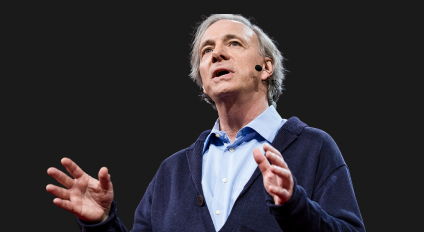
Ray Dalio, one of the world’s most successful investors and entrepreneurs, cites principles as his key to success.
Principles are ways of successfully dealing with reality to get what you want out of life.
Ray Dalio, one of the world’s most successful investors and entrepreneurs, cites principles as his key to success.
In 1975, Ray Dalio founded Bridgewater Associates, out of his two-bedroom apartment in New York City. Over forty years later, Bridgewater has grown into the largest hedge fund in the world and the fifth most important private company in the United States (according to Fortune magazine), and Dalio himself has been named to TIME’s list of the 100 most influential people in the world. Along the way Dalio discovered unique principles that have led to his and Bridgewater’s unique success. It is these principles, and not anything special about Dalio, that he believes are the reason behind whatever success he has had. He is now at a stage in his life that he wants to pass these principles along to others for them to judge for themselves and to do whatever they want with them.
Most people are reluctant to take in information that is inconsistent with what they have already concluded. When I ask why, a common answer is: "I want to make up my own mind." These people seem to think that considering opposing views will somehow threaten their ability to decide what they want to do. Nothing could be further from the truth. Taking in others' perspectives in order to consider them in no way reduces your freedom to think independently and make your own decisions. It will just broaden your perspective as you make them.
Conscious or subconscious (or intuitive) doesn’t have much to do with it. While I think they’re both useful and that it’s best if each is used to check the other out, what I’m talking about is the importance of open-mindedly taking in information, including different perspectives than one’s own, and then deciding what’s best as contrasted from blocking out perspectives that are contradictory to those one has (which is what most people do). I suggest you read my principles about the benefits of radical open-mindedness to be open-minded and assertive at the same time.
Please pass it along to help others. Or pass along my 30 minute Principles for Success video which is free on YouTube. Speaking about free principles from me, if you want to know how debt crises work and the principles I used to navigate the 2008 crisis one well, you can get a free copy of my template/book here (link)
You have to weigh the incremental gaining of information to determine the timing of when to make a decision – you can read more about this in Principles under principles 5.7 which starts on page 254.
Or it can weaken our own arguments, too, which is just as good as whatever gets us closest to the truth, including changing our minds.
If it’s helpful to you, please share it with others to help them.
Not much. It’s like thinking (with others’ help) before acting. The big problems this is meant to address is people starting with conclusions and blocking taking in other perspectives because they feel that it’s threatening to their position. I’m saying that taking in and considering other points of view doesn’t stand in the way of you deciding what you want to do — that it’s best to take in and then decide.
At least 3 characters are required to perform a search