Principles are ways of successfully dealing with reality to get what you want out of life.
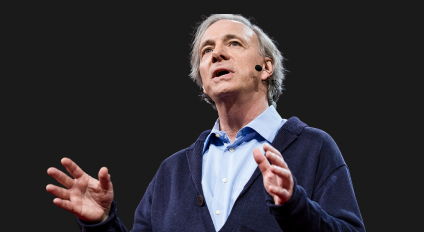
Ray Dalio, one of the world’s most successful investors and entrepreneurs, cites principles as his key to success.
Principles are ways of successfully dealing with reality to get what you want out of life.
Ray Dalio, one of the world’s most successful investors and entrepreneurs, cites principles as his key to success.
In 1975, Ray Dalio founded Bridgewater Associates, out of his two-bedroom apartment in New York City. Over forty years later, Bridgewater has grown into the largest hedge fund in the world and the fifth most important private company in the United States (according to Fortune magazine), and Dalio himself has been named to TIME’s list of the 100 most influential people in the world. Along the way Dalio discovered unique principles that have led to his and Bridgewater’s unique success. It is these principles, and not anything special about Dalio, that he believes are the reason behind whatever success he has had. He is now at a stage in his life that he wants to pass these principles along to others for them to judge for themselves and to do whatever they want with them.
Radical open-mindedness and radical transparency are invaluable for rapid learning and effective change. Learning is the product of a continuous real-time feedback loop in which we make decisions, see their outcomes, and improve our understanding of reality as a result. Being radically open-minded enhances the efficiency of those feedback loops, because it makes what you are doing, and why, so clear to yourself and others that there can’t be any misunderstandings. The more open-minded you are, the less likely you are to deceive yourself— and the more likely it is that others will give you honest feedback. If they are “believable” people (and it’s very important to know who is “believable”), you will learn a lot from them.
Intentionally seeking out sources of information that are from opposing points of view is a good practice for radical open-mindedness. However, what’s best is to simultaneously hold a point of view and worry that that point of view is wrong and then to know how to work oneself through the triangulation process with believable people who are experts and are willing to disagree with each other and you. It’s the fastest way to learning a lot and increasing your chances of being write. And its a great pleasure once you get used to it.
You can’t imagine the joy you bring me by letting me know that.
I have my view about transparency and others have their views about it and I won’t force my view on others — I will respect their limits when it comes to personal matters. As for my view, I am willing to be extremely open with reasonable people who won’t intentionally distort information to use it to their advantage to harm me.
You're right about the benefits of deep breathing and other mediation like exercises to calm oneself . For me the sheer pleasure of satisfying my curiosity and enjoying thoughtful disagreement to learn rather than to fight that makes me want to do it.
The three biggest differences between unsuccessful and successful people are that unsuccessful people 1) let ego and blindspot barriers stand in the way of success; they hold on to opinions that are wrong which could so easily be stress tested and corrected to learn and raise the changes of being right by triangulating with smart others with open-mindedness, 2) let the need for the approval of others and/or psychological pain stand in the way of their being willing to be adventurous, fail and learn from failures so they can evolve, 3) let their emotions and desires for the first order rewards control what they do rather than let their logic and appreciations for second order consequences drive them.
Mentors should be people of good character who want to be on your mission with you and who are capable. In Principles I explain what I mean by good character and good capability and how to tell whether or not they have them based on logic, their track-records and triangulation.
At least 3 characters are required to perform a search