Principles are ways of successfully dealing with reality to get what you want out of life.
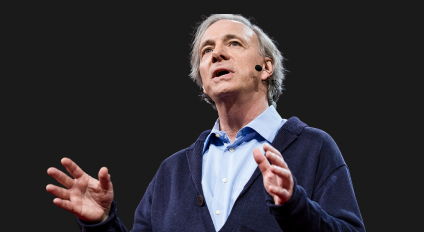
Ray Dalio, one of the world’s most successful investors and entrepreneurs, cites principles as his key to success.
Principles are ways of successfully dealing with reality to get what you want out of life.
Ray Dalio, one of the world’s most successful investors and entrepreneurs, cites principles as his key to success.
In 1975, Ray Dalio founded Bridgewater Associates, out of his two-bedroom apartment in New York City. Over forty years later, Bridgewater has grown into the largest hedge fund in the world and the fifth most important private company in the United States (according to Fortune magazine), and Dalio himself has been named to TIME’s list of the 100 most influential people in the world. Along the way Dalio discovered unique principles that have led to his and Bridgewater’s unique success. It is these principles, and not anything special about Dalio, that he believes are the reason behind whatever success he has had. He is now at a stage in his life that he wants to pass these principles along to others for them to judge for themselves and to do whatever they want with them.
You must be willing to do things in the unique ways you think are best-- and to open-mindedly reflect on the feedback that comes inevitably as a result of being that way.
Learning to be radically transparent is like learning to speak in public: While it's initially awkward, the more you do it, the more comfortable you will be with it. This has been true for me. For example, I still instinctively find being as radically transparent in the ways that I am in this book uncomfortable because I am exposing personal material to the public that will attract attention and criticism. Yet I am doing it because I've learned that it's best, and I wouldn't feel good about myself if I let my fears stand in the way. In other words, I have experienced the positive effects of radical transparency for so long that it's now uncomfortable for me not to be that way.
Besides giving me the freedom to be me, it has allowed me to understand others and for them to understand me, which is much more efficient and much more enjoyable than not having this understanding. Imagine how many fewer misunderstandings we would have and how much more efficient the world would be--and how much closer we all would be to knowing what's true--if instead of hiding what they think, people shared it openly. I'm not talking about everyone's very personal inner secrets; I'm talking about people's opinions of each other and of how the world works. As you'll see, I've learned firsthand how powerful this kind of radical truth and transparency is in improving my decision making and my relationships. So whenever I'm faced with the choice, my instinct is to be transparent. I practice it as a discipline and I recommend you do the same.
I introduced radical transparency soon after the company got to be a size so that we were not working intimately enough together to close direct communication. That size was 67 employees. In retrospect it would have been even better to have done it much earlier - probably around 12 employees - because the radical transparency has been so powerfully beneficial. Btw, when one hits around 100 employees, one needs a new system to make the organization cohesive because the capacity of people to have close communication and close relationships breaks down.
Be more curious to know what they think of than fearful it will be bad and hurt you because your hearing it won’t change what they think and your knowing what they think will help you consider the merit of it and also allow you to deal with the perception. Have you logical upper lever you practice controlling your emotional lower level you.
Yes. Insincerity stands in the way of getting at what’s true and not knowing what’s true stands in the way of making good decisions.
Change the organization you work at from the one that’s stifling you to one that will help you be great by allowing you to have two-way conversations about what makes sense. You have lots of choices. You need to make having the opportunity to think well a higher priority than whatever it is that is keeping you shackled there. Otherwise you will become brain dead and you won’t contribute up to your full potential.
I show them how radical transparency contributes to team unity. I show them how having radical truthfulness and radical transparency builds trust and understanding (because there’s no spin and because there is much greater clarity). I also show them how it allows all people to freely express themselves. I also show them how, if it’s done in a nasty way, people see that, people discuss that, and fix they it (or get rid of the nasty people). Once people understand how it helps them a whole lot, and that the only big impediment that stands in the way of wanting to be this way is their initial emotional discomfort with it that’s due to a bad habit that can be changed, most people will want to do it. Then we help people do it well with good coaching. Sure, not everyone will want to do it. On the other hand, more people want it than don’t want it because those who want it view it like honesty and don’t want to be in a dishonest environment. In any case, you have to decide on what kind of culture you want and deliver it. I and those I work with want a lot of truthfulness and transparency.
Of course. Please stop putting worrying about what others think about you ahead of worrying about what you need to do to be happy and successful.
At least 3 characters are required to perform a search