Principles are ways of successfully dealing with reality to get what you want out of life.
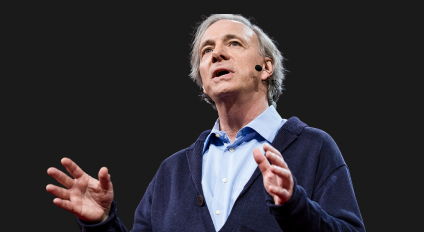
Ray Dalio, one of the world’s most successful investors and entrepreneurs, cites principles as his key to success.
Principles are ways of successfully dealing with reality to get what you want out of life.
Ray Dalio, one of the world’s most successful investors and entrepreneurs, cites principles as his key to success.
In 1975, Ray Dalio founded Bridgewater Associates, out of his two-bedroom apartment in New York City. Over forty years later, Bridgewater has grown into the largest hedge fund in the world and the fifth most important private company in the United States (according to Fortune magazine), and Dalio himself has been named to TIME’s list of the 100 most influential people in the world. Along the way Dalio discovered unique principles that have led to his and Bridgewater’s unique success. It is these principles, and not anything special about Dalio, that he believes are the reason behind whatever success he has had. He is now at a stage in his life that he wants to pass these principles along to others for them to judge for themselves and to do whatever they want with them.
Loyalty to specific people who are not in tight sync with the mission and how to achieve it will create factionalism and undermine the well-being of the community. It is often the case, and quite beautiful, that personal loyalties exist. However, it is also often the case, and quite ugly, when personal loyalties come into conflict with the organization's interests.
When personal loyalty is at odds with company loyalty and someone chooses personal loyalty, that’s the equivalent of company disloyalty - or said differently the person operating that way is willing to hurt the company to help someone else. Instead, in a compassionate idea-meritocracy (which is the way I run my organizations) I would welcome a discussion about how to best handle the person who might be harmed in order to do the right thing for the company, but I think all sorts of bad results would happen - factions rather than logic will rule, office politics will grow and bad things for the company/community would happen.
That’s what happens when the loyalty to the common mission is subordinated to the loyalty to individuals.
I will be sharing a few principles that I haven’t yet shared about loyalty and relationships that I think are really important about this subject.
I get to have a fair amount of contact with government officials and all different ways of operating - some good and a lot bad. What goes on behind closed doors is better than what is shown in the public because politicians do a lot of posturing with their constituents when they’re in the public eye and are more willing to compromise behind closed doors. I also see that there is great room for individuals to operate the way I’m describing with people they work with. But to understand how I’d do it if I were in their shoes. you should review my other principles too, especially my principle about having power and knowing how to use it well.
At least 3 characters are required to perform a search