Principles are ways of successfully dealing with reality to get what you want out of life.
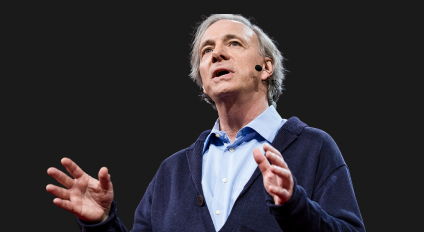
Ray Dalio, one of the world’s most successful investors and entrepreneurs, cites principles as his key to success.
Principles are ways of successfully dealing with reality to get what you want out of life.
Ray Dalio, one of the world’s most successful investors and entrepreneurs, cites principles as his key to success.
In 1975, Ray Dalio founded Bridgewater Associates, out of his two-bedroom apartment in New York City. Over forty years later, Bridgewater has grown into the largest hedge fund in the world and the fifth most important private company in the United States (according to Fortune magazine), and Dalio himself has been named to TIME’s list of the 100 most influential people in the world. Along the way Dalio discovered unique principles that have led to his and Bridgewater’s unique success. It is these principles, and not anything special about Dalio, that he believes are the reason behind whatever success he has had. He is now at a stage in his life that he wants to pass these principles along to others for them to judge for themselves and to do whatever they want with them.
Remember that computers have no common sense. For example, a computer could easily misconstrue the fact that people wake up in the morning and then eat breakfast to indicate that waking up makes people hungry. I’d rather have fewer bets (ideally uncorrelated ones) in which I am highly confident than more bets I’m less confident in, and would consider it intolerable if I couldn’t argue the logic behind any of my decisions. A lot of people vest their blind faith in machine learning because they find it much easier than developing deep understanding. For me, that deep understanding is essential, especially for what I do.
I don’t mean to imply that these mimicking or data-mining systems, as I call them, are useless. In fact, I believe that they can be extremely useful in making decisions in which the future range and configuration of events are the same as they’ve been in the past. Given enough computing power, all possible variables can be taken into consideration. For example, by analyzing data about the moves that great chess players have made under certain circumstances, or the procedures great surgeons have used during certain types of operations, valuable programs can be created for chess playing or surgery. Back in 1997, the computer program Deep Blue beat Garry Kasparov, the world’s highest-ranked chess player, using just this approach. But this approach fails in cases where the future is different from the past and you don’t know the cause-effect relationships well enough to recognize them all. Understanding these relationships as I do has saved me from making mistakes when others did, most obviously in the 2008 financial crisis. Nearly everyone else assumed that the future would be similar to the past. Focusing strictly on the logical cause-effect relationships was what allowed us to see what was really going on.
All people and computer algorithms are imperfect in different ways. For example 1) computers don’t have the common sense of a 5 year old, don’t have biases, can process a huge amount of info fast and precisely whereas now computers do, 2) people are much stronger conceptually, have biases and can’t process much information fast or precisely. So, the magic combination takes the advantage of the best of both while minimizing the exposure to the weaknesses of each.
While we never know if we truly understand anything it’s pretty easy to know if we don’t have understanding. For example an expert at something might be wrong while a non-expert on that something can know he is clueless. In the case of AI, one can know that one is clueless about why the decision of the AI is being made. My point is that that’s dangerous in cases when the future is different from the past because AI (more specifically machine learning) is largely based on what happened in the past. Of course there are some things that one can be wrong about that don’t have big bad consequences so being wrong is no big deal. But when 1) it’s really important, 2) one doesn't have good understanding, and 3) the future might be significantly different from the past, it’s really dangerous.
At least 3 characters are required to perform a search