Principles are ways of successfully dealing with reality to get what you want out of life.
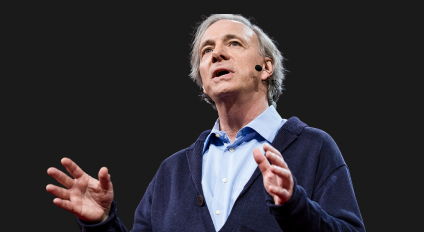
Ray Dalio, one of the world’s most successful investors and entrepreneurs, cites principles as his key to success.
Principles are ways of successfully dealing with reality to get what you want out of life.
Ray Dalio, one of the world’s most successful investors and entrepreneurs, cites principles as his key to success.
In 1975, Ray Dalio founded Bridgewater Associates, out of his two-bedroom apartment in New York City. Over forty years later, Bridgewater has grown into the largest hedge fund in the world and the fifth most important private company in the United States (according to Fortune magazine), and Dalio himself has been named to TIME’s list of the 100 most influential people in the world. Along the way Dalio discovered unique principles that have led to his and Bridgewater’s unique success. It is these principles, and not anything special about Dalio, that he believes are the reason behind whatever success he has had. He is now at a stage in his life that he wants to pass these principles along to others for them to judge for themselves and to do whatever they want with them.
Understanding, accepting, and working with reality is both practical and beautiful. I have become so much of a hyperrealist that I’ve learned to appreciate the beauty of all realities, even harsh ones, and have come to despise impractical idealism.
Don’t get me wrong: I believe in making dreams happen. To me, there’s nothing better in life than doing that. The pursuit of dreams is what gives life its flavor. My point is that people who create great things aren’t idle dreamers: They are totally grounded in reality. Being hyperrealistic will help you choose your dreams wisely and then achieve them.
I’m so glad that these principles have produced a massive benifical change in your life. The only thing I ask in return if for you pass them along to people you want to help. If the big book (600 pages) you might consider the much shorter book version (now available for purchase on Amazon) or the free video version of Principles (that’s available for free on YouTube). To take a look at the various principles and the various ways they are conveyed, are (here).
Impractical idealism is what people wish without having either a clue about how reality works or a path for finding out how reality works. I can’t possibility convey how often I hear people say “we need to do XYZ” and then spiral off into some idealistic, impractical theory about what should be done. Their confidence in the bad path is the problem. If they either had a practical path or said that they’re not confident that they have a proactive path so that they can find how how they can have a practical path (e.g. by experimenting and/or speaking with practical experts who have accomplished things that they are trying to accomplish) that would be good. I have a principle that I don’t think I put in the book which is “if you haven’t done something three times before successfully don’t assume you can do it”. If people kept that principle in mind and then set out a good path for finding out how to accomplish what they are trying to accomplish, that would be great.
I have found out that almost anyone can have almost anything that they want if they’re clever and determined enough to learn from their mistakes and if they’re open-minded enough to take in the best thinking that’s available to them. That is because they only have to make good decisions and they don’t have to come up with those good decisions alone. If they know what they’re good and bad at making decisions about and they know how to triangulate well with smart others, they can find out what the best decisions to make are. If you want an explanation of how to triangulate well with others, please read the section about that in my book Principles. Btw the book in app form and a “Coach” that will easily get you to the best principles for the particular situations you face is available free on the Apple App Store. It’s called Principles in Action.
The only way to make big dreams happen is by being hyperrealistic. You have to be realistic and creative to turn you dreams into realities.
You are mistakenly thinking that what I mean by hyperrealism is the same thing as lack of dreaming and building out dreams. To clarify, I direct you to my principle: Dreams + Reality + Determination = A Successful Life. From knowing many people who have turned dreams into realities and from having done quite a bit of that myself I know that the bridge that takes one from dreams to reality is a lot of experimenting that teaches one about the realities that one needs to successfully deal with to achieve the goal.
By impractical idealism I mean just focusing on wishes of how things were different and ignoring the realities that stand in the way of making them different. People who make dreams happen are laser focused on both the dream and the obstacles and are very practical in imagining ways to get around the obstacles whereas the impractical idealist is not focused on the obstacles and not practical in deriving ways to get around them.
Being a hyperrealist means confronting the world as it truly is, not as we wish it to be. When faced with a reality that doesn’t align with your desires, start by clearly defining your goals and understanding the gap between where you are and where you want to be. This clarity helps you see the specific changes needed. Next, develop a deep understanding of the cause-effect relationships that shape your environment. By grasping these dynamics, you can devise strategies to influence them in ways that move you closer to your objectives. For example, if you disagree with a decision at work, analyze the factors that led to it and consider how you might present alternative solutions or build support for your ideas. Embrace radical open-mindedness and radical transparency, which will accelerate your learning and adaptation. Remember, evolution drives everything; by continuously reflecting on your experiences and staying flexible, you can turn challenges into opportunities for growth. This approach not only helps you achieve your goals but also enhances your ability to shape the reality you encounter. PS. If you want further guidance you can find in my book “Principles: Life and Work”, particularly in the Life Principles section.
At least 3 characters are required to perform a search