Principles are ways of successfully dealing with reality to get what you want out of life.
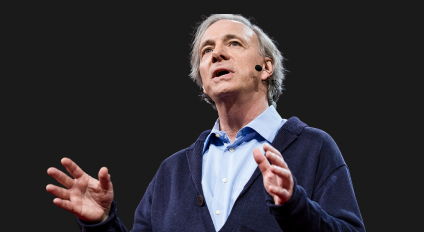
Ray Dalio, one of the world’s most successful investors and entrepreneurs, cites principles as his key to success.
Principles are ways of successfully dealing with reality to get what you want out of life.
Ray Dalio, one of the world’s most successful investors and entrepreneurs, cites principles as his key to success.
In 1975, Ray Dalio founded Bridgewater Associates, out of his two-bedroom apartment in New York City. Over forty years later, Bridgewater has grown into the largest hedge fund in the world and the fifth most important private company in the United States (according to Fortune magazine), and Dalio himself has been named to TIME’s list of the 100 most influential people in the world. Along the way Dalio discovered unique principles that have led to his and Bridgewater’s unique success. It is these principles, and not anything special about Dalio, that he believes are the reason behind whatever success he has had. He is now at a stage in his life that he wants to pass these principles along to others for them to judge for themselves and to do whatever they want with them.
If both parties are peers, it's appropriate to argue. But if one person is clearly more knowledgeable than the other, it is preferable for the less knowledgeable person to approach the more knowledgeable one as a student and for the more knowledgeable one to act as a teacher. Doing this well requires you to understand the concept of believability. I define believable people as those who have repeatedly and successfully accomplished the thing in question--who have a strong track record with at least three successes--and have great explanations of their approach when probed.
If you have a different view than someone who is believable on the topic at hand--or at least more believable than you are (if, say, you are in a discussion with your doctor about your health)--you should make it clear that you are asking questions because you are seeking to understand their perspective. Conversely, if you are clearly the more believable person, you might politely remind the other of that and suggest that they ask you questions.
All these strategies come together in two practices that, if you seek to become radically open-minded, you must master.
You have a choice to a) work well with people who are strong where you are weak and where you are strong where they are weak or b) avoid such people because they’re difficult for you to relate to. The a) path is better than the b) path if you and they can get yourselves to tolerate and appreciate the differences and the great results that complimentary relationship can produce. But, if you can’t do that, working with people who are more like you who relate to better is your best path. I encourage you to give path a) a good try before going to path b).
They have to learn that doing that is appropriate and that one earns their credibility in the agreed upon way. It’s like in any area - a team sport or any job in which jobs are assigned to one person and not another. The person who doesn’t get the job or doesn’t get his opinion chosen might think that that’s not fair, but that’s just the way it is. In the case of believability weighted decision making the same is true except there is much more evidence behind the way one’s opinions are chosen. Doing it our way it’s easier to demonstrate the logic and it’s objectivity.
In my book Principles I explained how to do that. In my app “Principles in Action” you get get the book and videos of actual situations that show us doing these things. The app is free on the iOS Apple App Store and widely loved (with a 4.9 rating)
At least 3 characters are required to perform a search