Principles are ways of successfully dealing with reality to get what you want out of life.
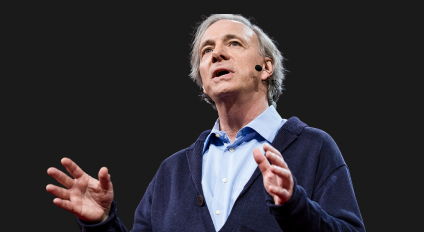
Ray Dalio, one of the world’s most successful investors and entrepreneurs, cites principles as his key to success.
Principles are ways of successfully dealing with reality to get what you want out of life.
Ray Dalio, one of the world’s most successful investors and entrepreneurs, cites principles as his key to success.
In 1975, Ray Dalio founded Bridgewater Associates, out of his two-bedroom apartment in New York City. Over forty years later, Bridgewater has grown into the largest hedge fund in the world and the fifth most important private company in the United States (according to Fortune magazine), and Dalio himself has been named to TIME’s list of the 100 most influential people in the world. Along the way Dalio discovered unique principles that have led to his and Bridgewater’s unique success. It is these principles, and not anything special about Dalio, that he believes are the reason behind whatever success he has had. He is now at a stage in his life that he wants to pass these principles along to others for them to judge for themselves and to do whatever they want with them.
As Carl Jung put it, "Man needs difficulties. They are necessary for health." Yet most people instinctually avoid pain. This is true whether we are talking about building the body (e.g., weight lifting) or the mind (e.g., frustration, mental struggle, embarrassment, shame)--and especially true when people confront the harsh reality of their own imperfections.
When your identity is built around being competent, willingly entering situations where you must look incompetent can be challenging, yet it’s essential for growth. Recognize that everyone has areas of weakness, and it’s okay to not have all the answers. The key is to develop humility and seek help from others who excel in areas where you don’t. Understand that mistakes are part of the learning process. By embracing them, you can identify problems, learn from them, and continuously improve. For instance, early in my career, I faced a significant setback due to a lack of expertise in a particular area. Instead of letting it define me, I used it as a learning opportunity, sought advice from experts, and gradually turned it into a strength. This balance of self-reliance and openness to external input is crucial for long-term success.
Pain doesn’t always have to be part of the growth formula. However, dealing with pain well often helps produce growth for several reasons. Do example pain serves as a powerful signal that something is wrong and it prompts us to confront our weaknesses and push beyond our current limits. The fear of pain can stand in the way of pursuing growth, and pain handled well is known to build strength - e.g. no pain, no gain. While it’s true that growth can occur without pain, pain tends to be a more urgent and effective catalyst for change. By pushing through pain and reflecting on its causes, we can accelerate our personal evolution. This doesn’t mean seeking out pain indiscriminately, but rather not shying away from it when it arises naturally through ambitious endeavors. Over time, this approach builds resilience and leads to more sustainable progress. Passion to achieve a goal is also a big, positive influences. Great passion to achieve a goal together with dealing with pain well is normally very good for growth.
As a manager, it’s crucial to embrace the responsibility of tackling tough problems head-on. However, this doesn’t mean shouldering the burden alone. One of my core principles is to escalate when you can’t adequately handle your responsibilities. This involves recognizing when a problem is beyond your current capacity and proactively seeking assistance or delegating it to someone better equipped. Escalation should not be viewed as a failure but as a responsible action to ensure the best outcome. By fostering an environment where team members feel comfortable escalating issues, you create a culture of transparency and shared responsibility, ultimately leading to more effective problem-solving and growth.
I appreciate your question. In my experience, success can sometimes create a kind of tunnel vision. When you or your organization becomes widely recognized for doing something well, there’s a natural tendency to keep doing it rather than venturing into new areas. While Bridgewater is renowned for its pioneering work in quantitative investing, I’ve always been aware of the risk of becoming too comfortable. That’s why we’ve consistently pushed ourselves to explore new frontiers—like developing our proprietary systems and expanding into global markets. The key is to stay humble, remain open to learning, and never let past achievements dictate future possibilities.
congratulations on how you are pushing yourself. You are probably getting a lot out of that. I am pushing my intellectual limits and not my physical limits and I'm doing that because of my intellectual passions. The mix is probably not optimal but that's ok with me because my goals are intellectual.
THERE WERE THREE THAT COME TO MIND THAT CHANGED MH TRAJECTORY AND LED TO MY SUCCESS So, The first was in 1975 when I was fired from my job because I was too rebellious which led to me founding Bridgewater Associates. This was a pivotal moment because it set me on the path to pursuing my passions of investing money and starting and building the world’s largest hedge funds. The second was when I learned how to meditate. This practice gave me equanimity and helped me approach situations with a calm and balanced mind. It also led me to reflect on my experiences and interactions, especially the painful ones. From these reflections, I derived principles that serve as guidelines for future decisions and actions. So, in other words, both the founding of Bridgewater and the practice of meditation and reflection were key breakthroughs in my life. TELL THE STORY OF HOW I WENT BROKE AND HAS TO BORROW $4000 FROM MY DAD. It taught me to be humble, find the smartest people who would disagree with me to stress-test my thinking, and diversify my bets in a way to reduced my risks without reducing my returns. They represent different aspects of success - professional and personal - and they all had a lasting impact on my trajectory.
To better normalize “productive discomfort” within teams and organizations, leaders should first acknowledge that discomfort is a natural part of growth and improvement. Encourage open discussions about challenges and mistakes by fostering an environment where everyone feels safe to express their thoughts. Implement a process for resolving conflicts that focuses on understanding differing perspectives and finding accurate conclusions. This approach not only helps in addressing issues but also strengthens team cohesion. Additionally, invest time in aligning the team’s principles and values, ensuring everyone is working towards common goals. Have people think about such things when they're not in pain and then reflect on what they thought when they are in pain. By doing such things, leaders can transform discomfort into a powerful tool for innovation and resilience.
Balancing protection and growth for your child is indeed a delicate task. It’s essential to empathize with their struggles without removing the challenges that foster resilience. Think of it as guiding them through their problems rather than solving them outright. Historical events and personal anecdotes remind me that discomfort is often a precursor to growth. By confronting and reflecting on pain, one gains clearer insight into paradoxes and problems. Encourage your child to embrace their failures and confront the pain they cause. This approach not only aids in genuine improvement but also equips them with the tools to handle future challenges independently. Remember, the goal is to help them find their path to success, not to eliminate all obstacles from their journey.
I’m currently pushing the boundaries of what’s possible with the Dalio Family Office, aiming to create a model that can last for generations. This involves not just financial strategies but also fostering strong family values and principles. It’s a challenging endeavor, akin to your practice of Tai Chi, where I focus on balancing discipline and innovation. Just as Chen Man Cheng emphasized the value of hard work, I believe in the power of thoughtful and principled decision-making to drive shared prosperity and personal growth. This journey is about embracing complexity and continuously seeking improvement, both personally and professionally.
At least 3 characters are required to perform a search