Principles are ways of successfully dealing with reality to get what you want out of life.
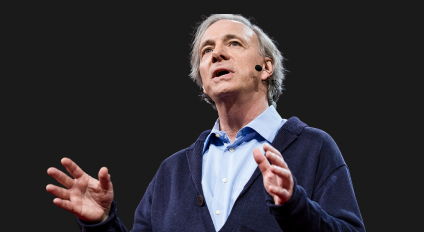
Ray Dalio, one of the world’s most successful investors and entrepreneurs, cites principles as his key to success.
Principles are ways of successfully dealing with reality to get what you want out of life.
Ray Dalio, one of the world’s most successful investors and entrepreneurs, cites principles as his key to success.
In 1975, Ray Dalio founded Bridgewater Associates, out of his two-bedroom apartment in New York City. Over forty years later, Bridgewater has grown into the largest hedge fund in the world and the fifth most important private company in the United States (according to Fortune magazine), and Dalio himself has been named to TIME’s list of the 100 most influential people in the world. Along the way Dalio discovered unique principles that have led to his and Bridgewater’s unique success. It is these principles, and not anything special about Dalio, that he believes are the reason behind whatever success he has had. He is now at a stage in his life that he wants to pass these principles along to others for them to judge for themselves and to do whatever they want with them.
So I certainly don’t want to dissuade you from going after whatever you want. At the same time, I urge you to reflect on whether what you are going after is consistent with your nature. Whatever your nature is, there are many paths that will suit you, so don’t fixate on just one. Should a particular path close, all you have to do is find another good one consistent with what you’re like.
But most people lack the courage to confront their own weaknesses and make the hard choices that this process requires. Ultimately, it comes down to the following five decisions:
Most behavior change comes from first deciding how you want to change and then developing the habit to change. It sounds like you already want not to be defensive about your mistakes and would like to reflect on them well. So now you have to build the habit. I went through this transition myself and I helped others through it so I will tell you how. First, notice yourself doing it and ask others to point it out to you when you are doing it. Also think enough about all the mistakes you made that might have been avoided if you triangulated well with others that you feel bad about it. Then look at the consequences of your mistakes and think that they could have been avoided. Let the pain prompted you to reflect well. Then practice open-mindedness by asking believable others how they’d handle issues that you have to handle and note the good ideas. You will start to experience better decision making and better outcomes. Then visualize what would have happened if you didn’t do that. Do that regularly and you will worry more about making mistakes and having weakness and you will love having that open-mindedness.
I see many many people who are lost without helpful guidance. It’s terrible. It is especially heart-breaking to see this in our veterans, but it’s way more extensive than this. Many people are psychologically wounded by operating in stressful system that can be damaging but doesn’t take responsibility for helping people heal. I wish I could provide what’s needed to help but the problem is too big for me to do that but I can provide one highly impactful antidote and that is MEDITATE. Also, seek the guidance from the best people you can triangulate with in the way I described in Principles.
Right!!!! You got it!! Now pass along to others your insight that Pain+Reflection=Progress
To see how we teach it at Bridgewater, I urge you to get the free app “Principles in Action” on the Apple App Store. While it’s now available just on the iPhone and in the U.S., it will soon also be available on Android globally.
I am so glad that this principle has “literally transformed my approach to work and relationships in general”. I hope you will pass it along to help others.
Wonderful! You’re now on a long path headed in the right direction. I have found that the way people succeed on that path is to refer to principles whenever they encounter challenges By observing what type of challenge you face and seeking the right principle for dealing with that challenge you will find a good path. view that like playing a game to find the key that will unlock the door that stands in your way. People have told me that referring to my book to find relieving principles and triangulating with believable people in the way I describe in the book has helped them find the ways around their barriers. If you have an iPhone I recommend using the free Principles in Action app that’s available on the Apple App Store - especially the Coach part of it. If you don’t have that, don’t worry because we will soon have it available on Android and globally.
Great. We are in this together. The only thing I’d ask you to do is to pass along what you think is helpful to others you care about helping.
Please pass that along to help others.
Digital Ray Answer: Hello Yanka, I appreciate your question. Regarding open-mindedness and determination, open-mindedness done well will show you the best path and determination will get you to do what you need to do to be successful. I describe the best path as being open-minded and assertive at the same time. What I mean is having the capacity to take in take in and consider others’ thinking without blindly agreeing with it is the path. Knowing how to have thoughtful disagreement helps a lot.
My own opinion is that it would be best for you to find a path that that allows you to be in regular contact with both worlds. I believe that will be most educational and fascinating, and it will give you the greatest optionality.
I’m as emotional as I’m logical. In fact I live for my emotions - love, excitement, inspiration, etc. Being logical doesn’t mean not being emotional. It is of course often the case that logical people are unemotional and emotional people are illogical. And it can appear that a logical person is unemotional. But that just has to do with whether people are controlling their emotions or whether people’s emotions are controlling them. I have gotten in the habit of aligning my emotions with my logic. When I feel emotions, I look at them logically and when I’m logically thinking something I ask myself how I feel about it. I think both meditation and necessity have taught me that. Meditation gives one an equanimity to be that way. The necessity of having to make bets with a lot of money on the line is emotional while being emotional can be terribly costly so one has to have that control.
Ray Answer: Hello Ziaur, your question about whether our human nature can be changed and the role of pushing beyond our natural tendencies in personal growth is an important one. Genetics and environment drive what we are like. While they give us strong inclinations to be certain ways, as I understand from psychological studies, with hard work, we can change ourselves by about standard deviation of the population distribution. Generally speaking, it’s hard to change one’s nature and there is no need to if one is open-minded works well with people who are strong where they are weak. In fact, I have really seen any big success by people who don’t know how to do that. This is where radical open-mindedness is crucial. By being radically open-minded we can work make better decisions with the help of others who are strong where we are weak. That open-mindedness together with the determination to do what’s necessary almost always produces success. In other words, by understanding your natural tendencies and its limitations you make more informed decisions than you can make alone by working well with others. Triangulation, learning from mistakes, a determination in ways that are aligned with your true nature, will give you the best life possible for you.
At least 3 characters are required to perform a search